Why Cost Optimization Needs a New Approach: The New Reality of Business Cost Management
For decades, organizations have approached cost optimization as a periodic exercise. Leadership teams review budgets, identify inefficiencies, negotiate supplier contracts, and implement cost-cutting initiatives when margins come under pressure. While these efforts can deliver short-term savings, they often rely on reactive decision-making and manual intervention.
As businesses navigate economic uncertainty, supply chain disruptions, workforce challenges, and rising customer expectations, the ability to continuously optimize operations is becoming a competitive necessity. Over the next three to five years, cost optimization will evolve from a scheduled business activity into an always-on capability powered by autonomous enterprise operations.
Why Traditional Cost Management Falls Short
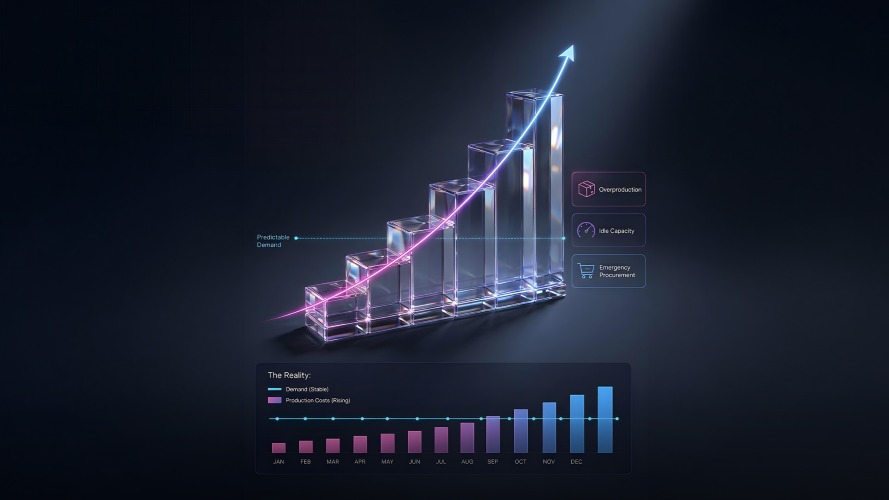
Most organizations still rely on historical reports, spreadsheets, and periodic reviews to manage costs. By the time inefficiencies are identified, the financial impact has often already occurred.
Common challenges include:
- Delayed visibility into operational spending
- Inaccurate forecasting and planning
- Excess inventory and working capital lockup
- Emergency procurement and premium supplier costs
- Fragmented data across multiple systems
These issues create hidden costs that gradually erode profitability and limit business agility.
The Rise of Autonomous Enterprise Operations
The next generation of enterprise operations will be driven by intelligent systems capable of monitoring, analyzing, and responding to business conditions in real time.
Modern organizations generate vast amounts of data across finance, procurement, manufacturing, supply chain, sales, and customer service. Advances in automation, artificial intelligence, and machine learning now make it possible to transform this data into continuous operational intelligence.
Rather than waiting for managers to identify problems, autonomous systems can detect anomalies, predict risks, and recommend or execute corrective actions automatically.
This represents a fundamental shift from reactive management to proactive optimization.
Unified ERP Platforms as the Foundation
Autonomous operations cannot exist without connected enterprise systems.
Many organizations continue to operate with disconnected applications that create data silos and limit visibility. As a result, teams make decisions based on incomplete information.
Unified ERP platforms solve this challenge by creating a single source of truth across the organization. Finance, procurement, supply chain, manufacturing, and workforce planning functions become connected through shared data and integrated workflows.
This level of visibility enables organizations to identify inefficiencies faster and optimize performance across the entire enterprise rather than within individual departments.
How Autonomous Operations Will Improve Margins
Margin erosion often occurs through hundreds of small inefficiencies rather than a single major event.
Autonomous systems help eliminate these losses by continuously monitoring operational performance and taking action when risks emerge.
Examples include:
- Automatically adjusting inventory levels based on demand signals
- Identifying procurement savings opportunities
- Detecting unusual spending patterns before they escalate
- Improving forecast accuracy through real-time data analysis
- Optimizing resource allocation across business functions
As these capabilities mature, organizations will be able to protect margins while improving speed, accuracy, and operational efficiency.
The Changing Role of Business Leaders
As automation becomes more intelligent, the role of leadership will also evolve.
Future leaders will spend less time gathering data and managing routine operational decisions. Instead, they will focus on strategic priorities such as growth, innovation, customer experience, and long-term value creation.
Technology will not replace leadership. It will enhance leadership by providing better visibility, faster insights, and more informed decision-making.
The organizations that embrace this shift will gain a significant competitive advantage.
Preparing for the Next 3 to 5 Years
The future belongs to businesses that move beyond isolated automation projects and build connected digital ecosystems.
Success will require:
- Modern ERP architectures
- Strong data governance
- Process standardization
- Intelligent automation capabilities
- A culture that embraces data-driven decision-making
Organizations that establish these foundations today will be better positioned to unlock the full value of autonomous operations tomorrow.
Conclusion
Cost optimization is no longer simply about reducing expenses. It is becoming a continuous, enterprise-wide capability powered by automation, intelligence, and connected business systems.
Over the next three to five years, autonomous enterprise operations will redefine how organizations manage costs, improve efficiency, and protect margins. Companies that embrace this transformation will not only reduce waste but also create more resilient, agile, and profitable businesses.
The future of cost optimization is not reactive, it is autonomous.